Autonomous
Factory

Overview

Autonomous
Factory

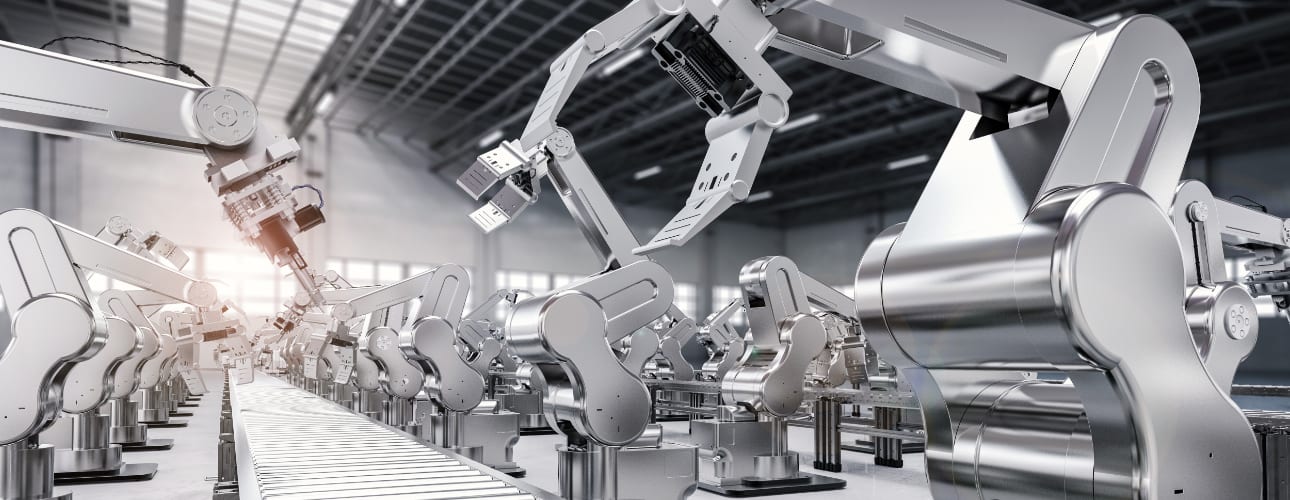
Autonomous Factory is an intelligent manufacturing environment that leverages advanced ICT technologies, represented by AI, to seamlessly connect various entities across the entire production domain—including equipment—and integrate factory-wide data. This enables real-time monitoring and analysis, autonomous decision-making and control in response to environmental changes, and automation and unmanned operations beyond human limitations, ultimately achieving minimal cost, maximum quality, and optimal productivity.


Autonomous Factory

Currently, many Autonomous Factory implementations focus primarily on the digitalization of production and management systems such as ERP and MES.
However, the realization of a true Autonomous Factory requires not only the smartization of systems but also the intelligent advancement of manufacturing equipment and their operations, enabling improvements in productivity and quality while minimizing costs.
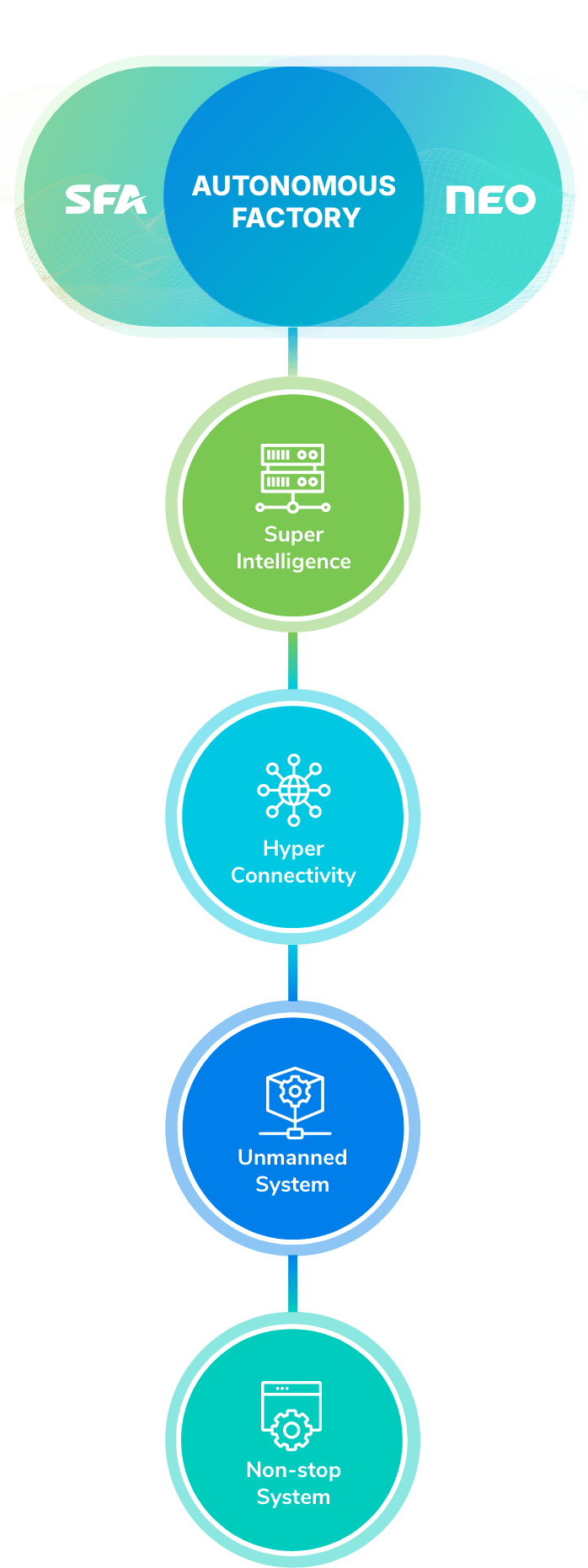
Without this, it is difficult to achieve the core values of a Autonomous Factory—intelligence, hyper-connectivity, autonomy, and zero downtime
Super
Intelligence
Smart productivity beyond human limits continues and improves itself as the equipment for itself is recognising changing environment even in unpredictable situations through analysis and self-decision making process assisted by real time data collection and AI data-learning.
Hyper
Connectivity
Organic connection of ICT (Information and Communication Technology) with all parts, the production equipment, and the operation & management systems at the manufacturing site allows real time monitoring and control of the entire process.
Unmanned
System
Human participation in the manufacturing line is minimised (unmanned) through the convergence technology of Domain Knowledge of the manufacturing equipment and the manufacturing lines in various industries, and autonomous analysis & judgement technologies of AI-based large-volume data.
Non-stop
System
Non-stop production is available by predicting necessary maintenance time in advance to execute minimum maintenance activities instead of periodic & single-time maintenance activities which cause production disruption.